Insights
Expert thinking on AI agents, knowledge engineering, and the business case for intelligence built from the ground up.

Sleep Architecture and Executive Function: The One Biological Variable Leaders Consistently Underestimate
The relationship between sleep stage disruption and next-day decision quality is not a wellness issue. It is a performance engineering problem. When we truncate REM sleep, we do not just make leaders tired — we systematically dismantle the precise cognitive functions they need most.

The Identity Cost of AI Augmentation: What Happens to a Leader's Sense of Competence When the Machine Outperforms Them
When AI consistently outperforms an executive in their core area of expertise, the psychological response is not adaptation. It is a quiet erosion of professional identity — and organisations are entirely unprepared for it.

The Measurement Trap: Why the Metrics Leaders Use to Track Their Own Performance Are the Last to Detect Decline
The instruments executives use to self-assess during a transition are themselves corrupted by the same cognitive conditions they are trying to measure. Your dashboard looks healthy. Your performance may not be.

The Synthetic Colleague: What AI Does to Human Judgement in the Executive Suite
A senior director uses an enterprise AI tool to structure a sensitive reorganisation at 10:00 PM. The logic is flawless. The tone is objective. The relief is profound. The structure fails upon contact with the cultural reality the AI could not see. We are treating synthetic intelligence as if it were a colleague. It is not.

The Irreversibility Gradient: Sequencing Decisions When the Stakes Are Asymmetric
An incoming CEO defers a difficult conversation with a resistant CMO, believing she is sequencing the work. Six months later, the cost of addressing the behaviour has multiplied exponentially. The decision to wait felt like prudence. It was an irreversible error disguised as a sequencing choice.

The Stress-Memory Paradox: Why High-Pressure Environments Corrupt the Learning Leaders Need
An executive is 45 days into a new role. In a critical board meeting, the specific data she reviewed that morning is inaccessible. This is not an intelligence failure. It is a predictable neurological response to the conditions of a senior transition.

The Feedback Loop That Isn't: Why AI Coaching Tools Miss What Matters
An executive's AI coaching dashboard shows green across every metric. Engagement is up. Communication scores are strong. Yet his senior team is quietly disengaging. The algorithm cannot see what is actually happening — and neither, increasingly, can he.

The Cognitive Division of Labour: What Leaders Must Never Delegate to AI
The most dangerous moment in the integration of AI into executive leadership is not when the technology fails. It is when it works so well that leaders stop doing the cognitive work that cannot be delegated — and only discover the loss when the environment demands it.

The Confidence Calibration Problem: When AI Certainty Outpaces Human Readiness
When an AI system presents a recommendation with 94% confidence, the cognitive load required to challenge it is significantly higher than the load required to accept it. This is not a flaw in the algorithm. It is a flaw in how humans respond to algorithmic authority.

The Authority Paradox: How AI Augmentation Changes What It Means to Lead
If your authority is based on knowing the answer, and the machine knows the answer faster and more accurately, your authority is redundant. The executives who succeed in AI-augmented environments have understood something fundamental about what leadership is actually for.

The Performance Baseline Problem: Why Leaders Can't Measure What They Can't See
You cannot manage what you cannot measure. But the transition itself compromises the very cognitive function required to measure accurately. This is the performance baseline problem — and it is the most consequential blind spot in senior leadership transitions.

The Attention Economy of the Executive Brain
Removing administrative friction from knowledge work does not automatically increase strategic capacity. It may be doing the opposite — and the executives most at risk are the ones who were previously most effective.

The Augmented Executive: What the Next Generation of AI-Literate Leaders Actually Looks Like
The introduction of AI into the executive suite is a transition of the highest order. It does not just change the tools available to leaders. It changes the basis of their authority. And the executives who navigate it successfully are not the most technically proficient — they are the most neurologically aware.

When the Algorithm Is Confident and You Should Not Be: The Case for Human Override in AI-Augmented Decisions
When an AI system presents a recommendation with a 94% confidence score, the cognitive load required to challenge it is significantly higher than the load required to accept it. This is not a flaw in the algorithm. It is a flaw in how humans respond to algorithmic authority.

The Cortisol Ceiling: Why High-Stakes AI Decisions Require Neurologically-Aware Leaders
The failure of major AI deployments is rarely a failure of technical understanding. It is almost always a failure of cognitive state — and the mechanism is neurological, not psychological.
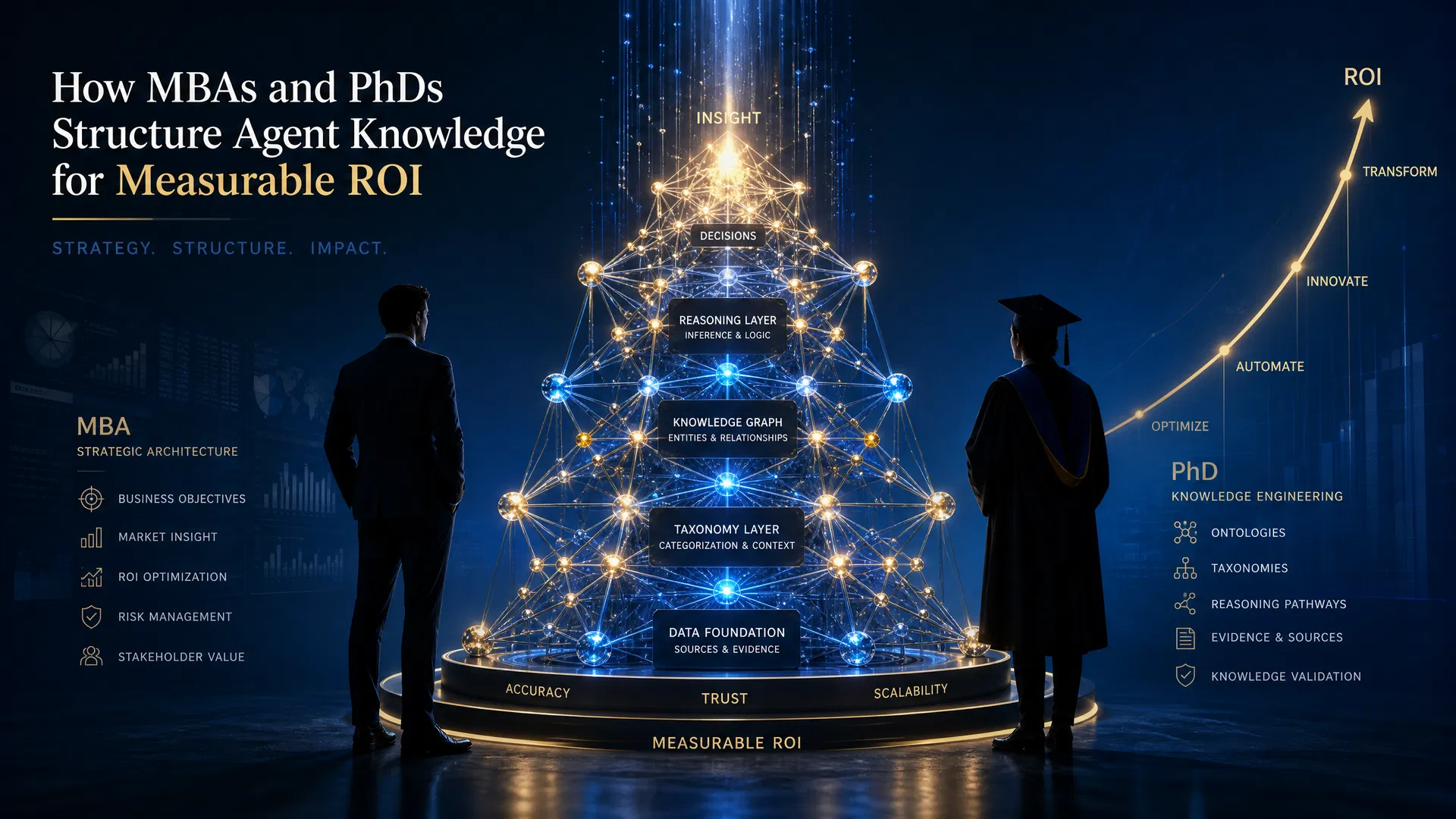
How MBAs and PhDs Structure Agent Knowledge for Measurable ROI
The question business leaders ask most often about AI agent investment is: 'How do we know it will actually work?' The answer lies not in the technology — it lies in how the agent's knowledge is structured. And that work requires expertise that goes beyond software engineering.
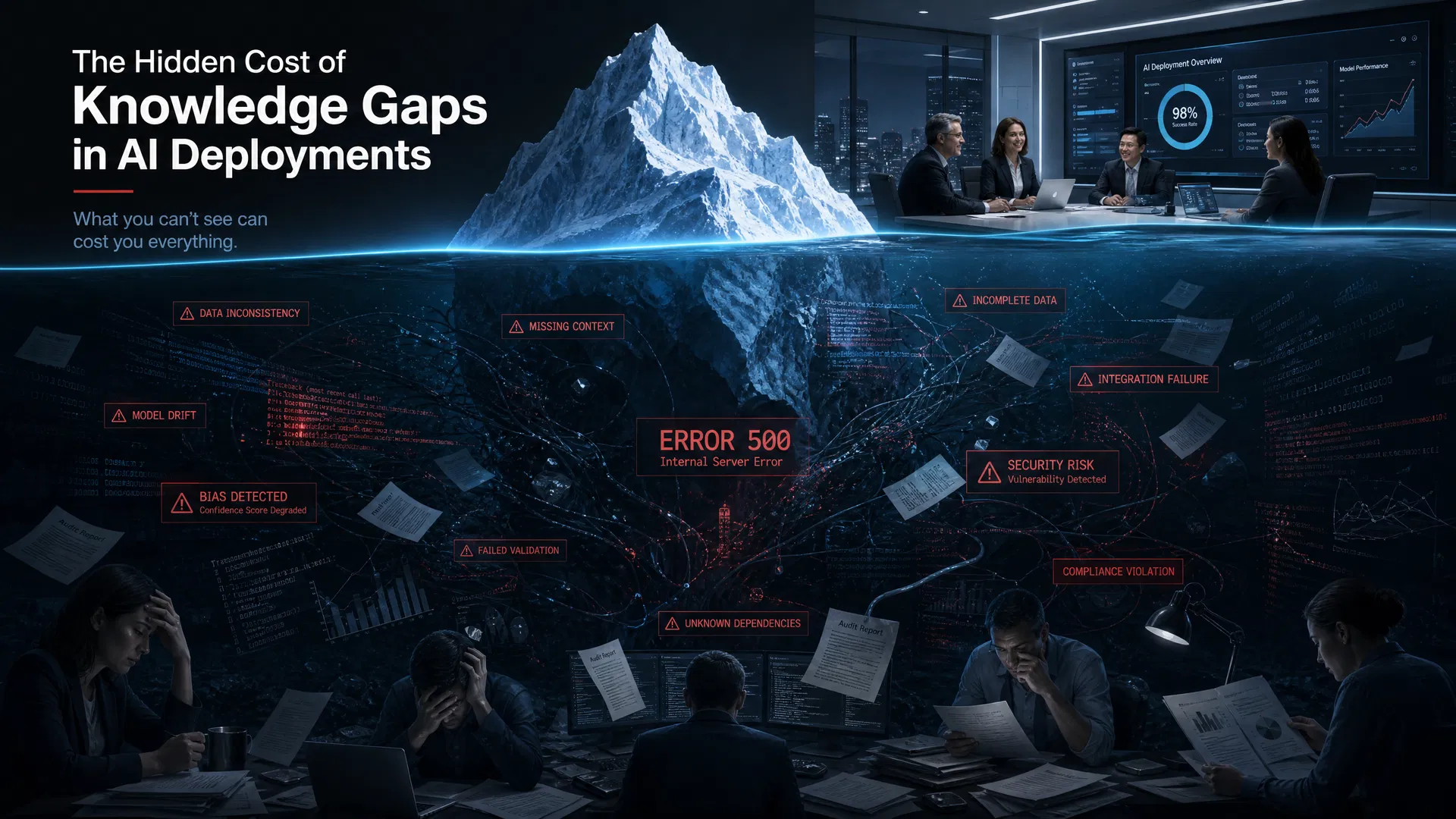
The Hidden Cost of Knowledge Gaps in AI Deployments
An operations director told me his AI deployment was saving 40 hours of staff time per week. When we examined the full picture — verification overhead, error remediation, and the near-miss that had prompted mandatory review processes — the net figure was closer to neutral.
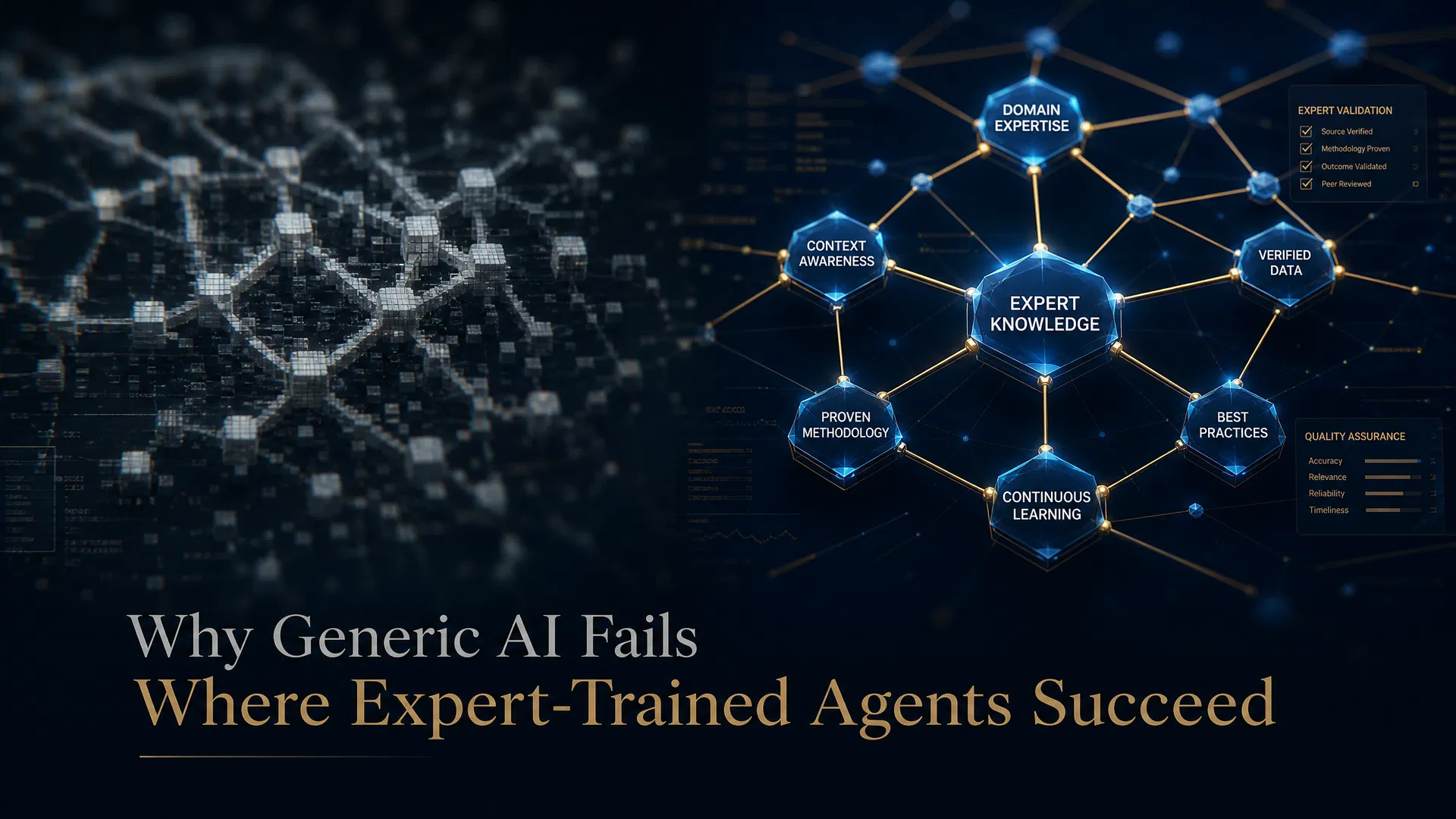
Why Generic AI Fails Where Expert-Trained Agents Succeed
A financial services firm deployed a general-purpose AI assistant and watched their team quietly stop using it within six weeks. Not because it was unintelligent — but because it was wrong in ways that were difficult to detect. This is the dominant pattern in enterprise AI adoption right now.